


Expert insights on creating lasting market advantages through robust business strategies for sustained growth.
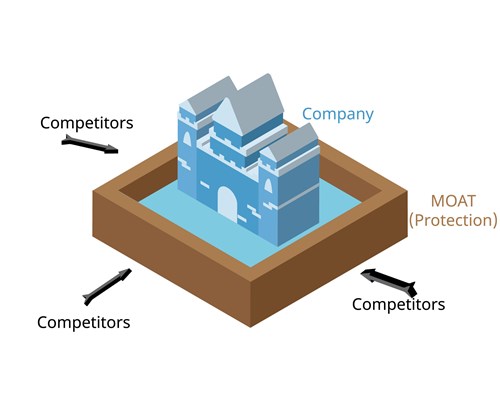
From years spent analyzing diverse companies and advising leaders across industries, it’s evident that true business longevity stems from more than just innovative products or aggressive sales. It requires a fundamental understanding of market dynamics and a deliberate effort to erect barriers against competition. This isn’t about short-term gains; it’s about establishing enduring market power. The concept of a “moat” – a protective barrier around a business – has become central to strategic thinking. It represents the distinct factors that allow a company to generate high returns on capital over extended periods, making it exceptionally difficult for rivals to replicate its success.
Overview
- Sustainable competitive advantages are crucial for long-term business success, creating barriers against market rivals.
- The “Moat” Strategy refers to these protective characteristics that help a business maintain profitability.
- Common types of moats include network effects, intangible assets, cost advantages, switching costs, and efficient scale.
- Successful moat building requires continuous innovation, strong brand management, and strategic capital allocation.
- Businesses must actively measure and fortify their moats, adapting to changing market conditions and technological shifts.
- Real-world examples demonstrate that even established moats can erode without constant vigilance and strategic evolution.
- The US market, with its dynamic landscape, demands strong moats for companies to thrive amidst intense competition.
The Imperative of Building sustainable competitive advantages (The “Moat” Strategy)
In today’s fast-paced global economy, the phrase Building sustainable competitive advantages (The “Moat” Strategy) is more relevant than ever. For any business aiming for long-term viability, simply being good is rarely enough. Competition emerges from every corner, eroding margins and market share rapidly. A well-defined moat protects a company’s profitability and market position. Without these protective factors, even highly successful businesses can become vulnerable. Consider the stark realities faced by many startups; while some experience rapid growth, only those with inherent competitive advantages tend to survive and thrive beyond the initial boom.
Effective moat strategies are not accidents; they are built with intention. This strategic approach ensures a company can withstand competitive pressures and economic downturns. It allows for predictable cash flows and supports continued investment in future growth. Businesses operating without a clear moat are often locked in a perpetual struggle for survival, constantly reacting to market shifts rather than shaping them. From my perspective, understanding and actively developing these advantages is fundamental to business leadership.
Core Elements of Enduring Market Power
True market power is built upon several foundational pillars. One critical element is network effects, where a product or service becomes more valuable as more people use it. Think of social media platforms or online marketplaces; their utility grows exponentially with user adoption. Another powerful moat is intangible assets, including strong brands, patents, and regulatory licenses. A powerful brand name can command premium pricing and foster immense customer loyalty, creating an immediate preference over generic alternatives.
Cost advantages also form a robust moat. Companies like Walmart or Southwest Airlines achieve this through operational efficiencies, scale, or proprietary processes that allow them to produce goods or services at a significantly lower cost than competitors. Switching costs create friction for customers wanting to move to a competitor, such as complex software integrations or loyalty programs. Finally, efficient scale applies to markets where a limited number of competitors can operate profitably due to high capital requirements or specific geographic limitations. These diverse elements represent practical approaches to securing a defensible market position.
Strategic Framework for Building sustainable competitive advantages (The “Moat” Strategy)
Effectively Building sustainable competitive advantages (The “Moat” Strategy) requires a clear, structured approach. It begins with identifying potential areas where a company can genuinely differentiate itself. This involves deep market research, competitive analysis, and an honest assessment of internal capabilities. Once potential moats are identified, the next step is strategic investment. This could mean allocating capital to R&D for proprietary technology, aggressive marketing to build brand equity, or optimizing supply chains for cost leadership.
Furthermore, leadership must cultivate a culture that supports moat development. This includes fostering innovation, prioritizing customer retention, and continually monitoring the competitive landscape. For example, a company might invest heavily in data analytics to understand customer behavior, thereby creating stickier services. Another might focus on building strong partnerships that offer exclusive access to distribution channels or unique resources. The framework emphasizes proactive measures over reactive responses, ensuring the moat is not just built but consistently reinforced.
Adapting Your Moat: Continually Building sustainable competitive advantages (The “Moat” Strategy)
The process of Building sustainable competitive advantages (The “Moat” Strategy) is never truly finished. Markets are dynamic, technology evolves, and competitors constantly seek ways to circumvent existing moats. What constitutes a strong advantage today might be obsolete tomorrow. Businesses must therefore adopt a mindset of continuous adaptation and fortification. This involves regularly auditing existing moats, assessing their resilience against emerging threats, and exploring new avenues for differentiation.
Consider the US technology sector, where innovation cycles are incredibly rapid. Companies like Apple have maintained strong moats through relentless product innovation, brand loyalty, and an integrated ecosystem, but they still face continuous pressure. This demands ongoing investment in R&D, strategic acquisitions, and a keen eye on consumer trends. Leaders must be willing to divest from weakening moats and invest in new ones. This agile approach to competitive advantage ensures long-term market leadership and sustained profitability, rather than resting on past successes. It’s about maintaining relevance and staying ahead of the curve.


